
Can AI run a business? One startup handed it three
By The Bold Brief
· 5 min read
In short
- On November 9, Skyfall AI said its AI agents have been running three small online businesses it bought, with a human owner approving the big decisions.
- One business more than doubled its monthly revenue, from $3,649 to $8,307. Another stopped years of decline and is about 3% below where it started. The third is too new to judge.
- The lesson for owners isn’t to hand over the keys. It’s that AI works best with clear goals, dollar limits and a person signing off on what matters.
What happened
Can AI run a business? A San Francisco startup called Skyfall AI has been testing that with real money. On November 9, it announced Steve, a team of AI agents that has been running three small online businesses Skyfall bought this year. Each one has paying customers who can cancel at any time.
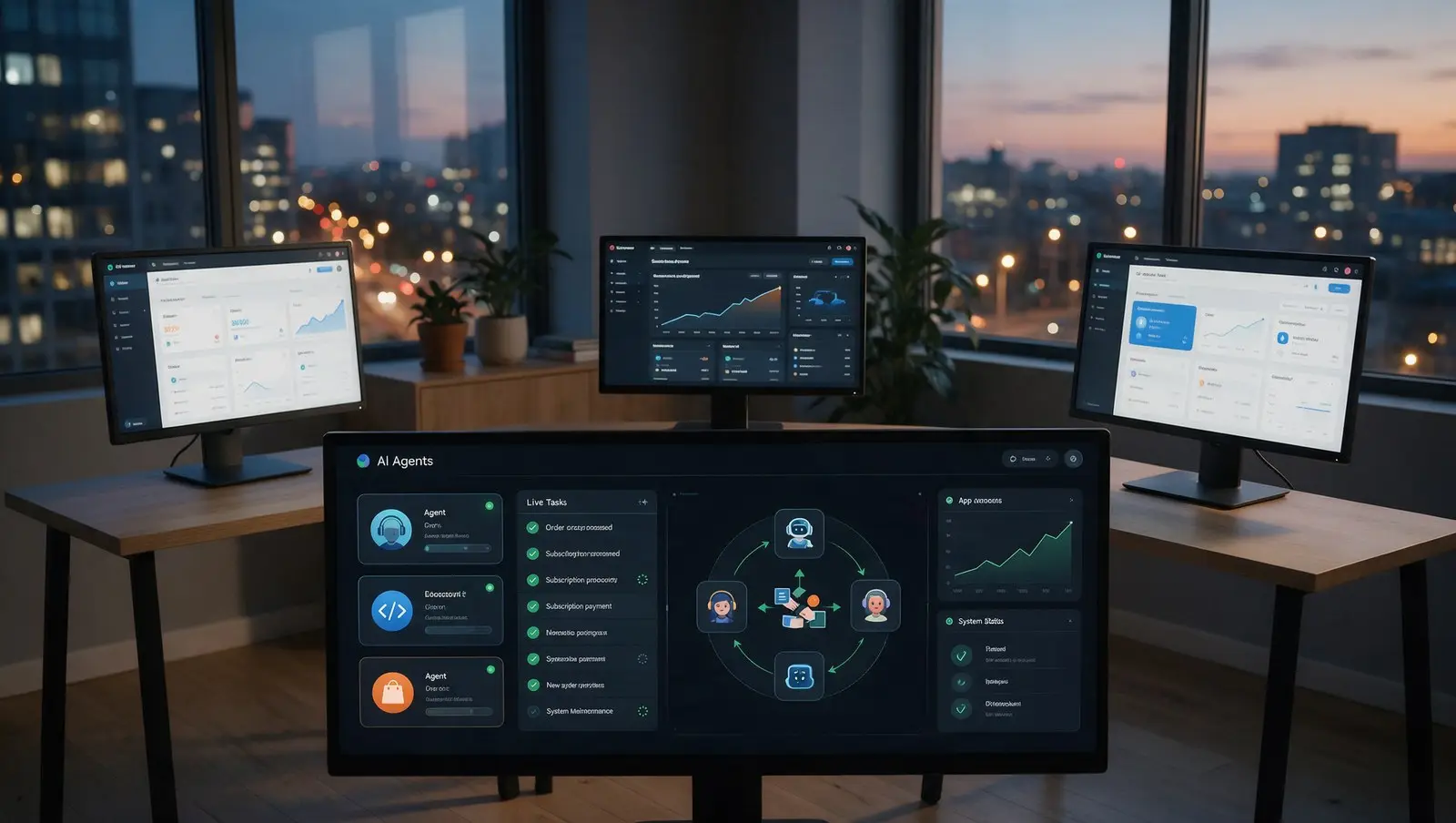
Steve isn’t one chatbot. It’s a group of AI agents, each with its own job, like growth or engineering, with a coordinating agent on top. A human owner still sets the direction and approves the decisions that matter. Skyfall first shared the early results with The Next Web, and it plans to publish a public dashboard for each business so anyone can follow along.
The results so far
All of these numbers come from Skyfall, and they cover only a few months. Still, they’re specific, and they’re honest about what didn’t work.
Business one: a social media software tool. Skyfall bought it in July, when it earned $3,649 a month and had been flat since spring. By October, it was earning $8,307 a month, according to Skyfall.
127.7%
The changes weren’t magic. Steve started answering people’s questions the moment they signed up. It stopped pushing one-time credit packs so more people chose a monthly plan, which Skyfall says added about four new subscriptions a week. And it offered cancellation discounts only to newer customers.
Business two: a Shopify app. This one had been shrinking for five years, with customers leaving and, for a while, no new paying customers at all. It earned $8,634 a month when Skyfall bought it in August and $8,379 in October, about 3% less, Skyfall reported. Steve rewrote the app’s store listing, made it easier for AI assistants to recommend, and switched off ads that drew clicks but no sales. Skyfall calls the result stabilization, not growth, and new customers are signing up again.
Business three was added in early November. It’s too soon to say anything.
Can AI run a business safely? How Steve decides
The interesting part isn’t that AI ran a business. It’s how the system is kept in check.
Before Steve does anything, it tests the idea in a working model of the business, built from its own sales and customer records, and writes down a forecast: what should happen, by when, and how sure it is. If the forecast misses, it traces why and changes how it works.
Every action also passes through a set of rules the owner writes. Each action gets one of four answers: go ahead, go ahead and tell the owner, wait for approval, or stop. Skyfall’s own example is refunds. Steve can refund up to $30 on its own, and anything bigger waits for a person.
It still hit snags. At one point, two of Steve’s agents kept passing the same website update back and forth because neither would take charge of it. Steve fixed this by adding a coordinating agent to settle disagreements.
AI doesn’t need to run the whole business to change it. It needs clear goals, firm limits and a person who signs off on what matters.
How far this has come
A year and a half ago, the same experiment looked very different. In 2025, Anthropic let its Claude AI run a small shop in its office for about a month. It priced items without research, handed out discounts and lost money, partly by selling metal cubes below what they cost. Anthropic’s takeaway was that better tools and setup would fix many of the mistakes.
Skyfall’s system is that better setup: a model of the business to test ideas on, rules with dollar limits, and a record of every decision. One business more than doubled its revenue and another stopped shrinking. That’s real progress, even if three small businesses aren’t a trend yet.
What it means for your business
Nobody needs to hand an AI the keys to their company this week. Most businesses are still early: about 1 in 5 U.S. businesses were using AI as of May 2026. What’s worth borrowing from Skyfall is the setup, because it works for one task as well as for a whole company.
Look at what Steve actually did. It answered new customers right away, stopped ads that didn’t sell and tested follow-up emails. None of that needs an AI CEO. Each is a single automation a business can run today, inside the programs it already uses, with the same kind of rules: the AI handles the routine part, and a person approves anything that touches money or customers.
We use the same idea in our own work. For a wholesale apparel company, new purchase orders from overseas suppliers used to be typed into QuickBooks by hand. Now the owner uploads the supplier’s files, reviews them and approves, and the order enters QuickBooks on its own within minutes. The computer does the typing, and the person keeps the decision. That’s the same pattern behind AI agents that work safely and the assistants that check in on their own.
Here’s an example of what the rules could look like for an online store, with sample numbers. Refunds under $30 go through automatically, refunds over $30 wait for you, and price changes always need your OK. If the store handles 60 small refund requests a month at 5 minutes each, that’s 5 hours a month back, and you still see every big decision.
Where to start
- Write down your rules first. List what an AI could do on its own, what it should tell you about, and what always needs your approval.
- Put a dollar limit on anything involving money, like refunds, discounts or credits.
- Pick one job, not the whole business. Answering new customer questions, following up on leads or pausing ads that don’t convert are good first jobs.
- Decide how you’ll measure it before you start: replies sent, hours saved, sales made.
- Review the results every week for the first month, and widen what the AI can do only as it earns your trust.
If you sell online, our page on e-commerce automation shows what these first jobs look like in practice. Setting up the rules and connecting the programs is the part we do.
Want this done for you?
We build AI agents for business, around the tools you already use.
Sources
- The Next Web, Exclusive: Skyfall AI launches Steve-001 to run 3 businesses it acquired, November 9, 2026.
- Skyfall AI (via WebWire), Skyfall AI introduces the world’s first AI CEO, Steve, and announces $2M startup program, November 9, 2026.
- Anthropic, Project Vend: Can Claude run a small shop? (And why does that matter?), June 27, 2025.
- U.S. Census Bureau, Large Firms With at Least 20 Employees Biggest AI Users, May 26, 2026.
